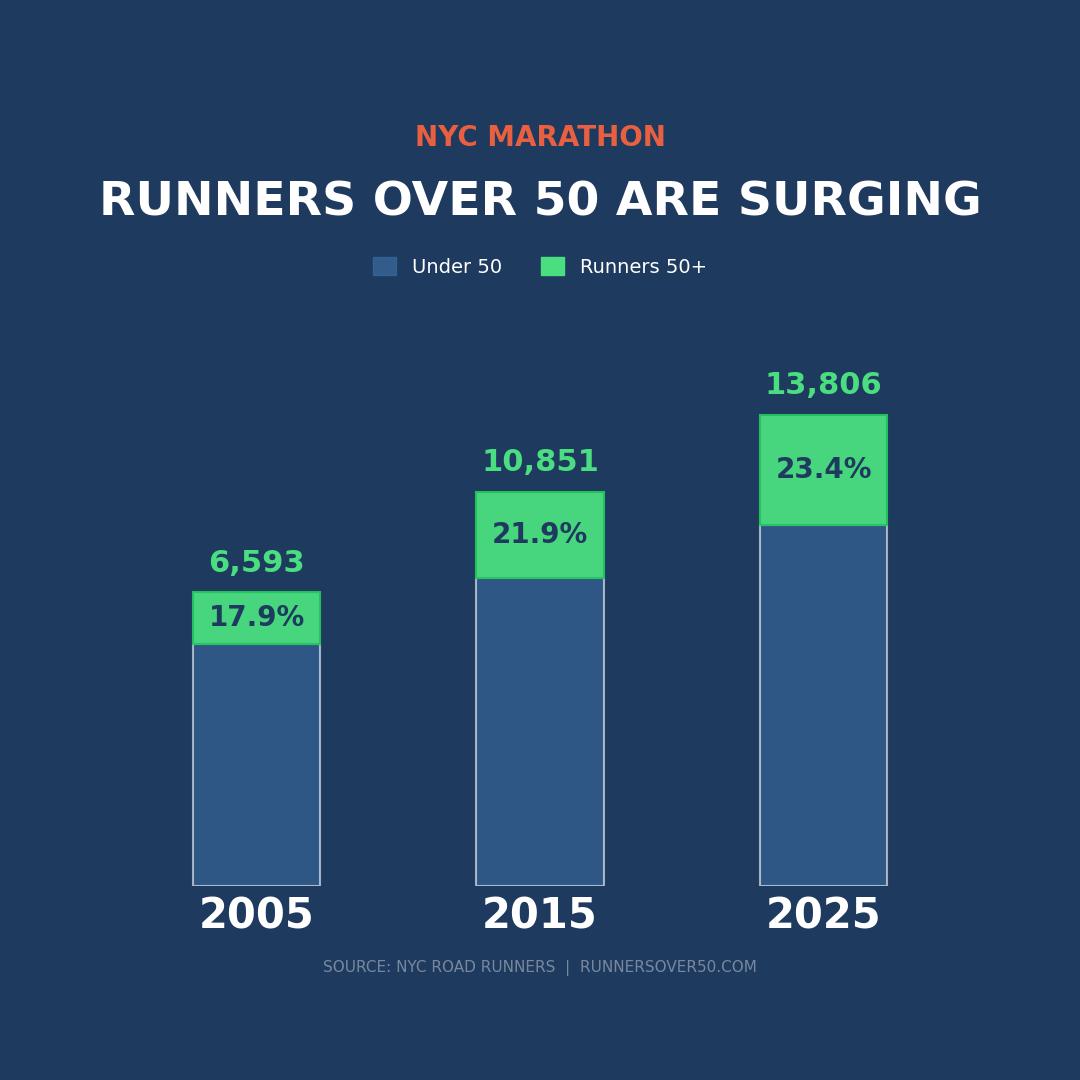
In 2005, 6,593 runners aged 50 or older crossed the finish line at the New York City Marathon. In 2025, that number was 13,806. That is a 109% increase over 20 years.
The overall field grew too — from 36,863 finishers to 59,122, a 60% increase. But runners over 50 grew at nearly twice that rate. Their share of the field went from 17.9% in 2005 to 23.4% in 2025. Nearly one in four NYC Marathon finishers is now over 50.
The Numbers
| 2005 | 2015 | 2025 | |
|---|---|---|---|
| Total finishers | 36,863 | 49,460 | 59,122 |
| Runners 50+ | 6,593 | 10,851 | 13,806 |
| 50+ share of field | 17.9% | 21.9% | 23.4% |
2005
6,593
17.9% of field
2015
10,851
21.9% of field
2025
13,806
23.4% of field
20-year growth
+109%
runners 50+
2025 age group breakdown — runners 50+
By Age Group, 2025
| Age Group | Finishers |
|---|---|
| 50-54 | 5,710 |
| 55-59 | 3,858 |
| 60-64 | 2,554 |
| 65-69 | 1,118 |
| 70-74 | 395 |
| 75-79 | 128 |
| 80-89 | 42 |
| 90-99 | 1 |
| Total 50+ | 13,806 |
The growth is not concentrated in the youngest of these groups. The 65-69 bracket went from 310 finishers in 2005 to 1,118 in 2025 — a 261% increase. The 70-74 bracket went from 123 to 395 — a 221% increase. In 2025, a 91-year-old finished the race.
What This Tells Us
This is not a niche trend. Older runners are not filling a small corner of the field — they are reshaping it. The data from New York is consistent with what is happening across major marathons globally. Runners are starting later, continuing longer, and finishing faster than previous generations at the same ages.
The reasons are not mysterious: better training science, better shoes, better understanding of recovery and nutrition, and a cultural shift in what people believe is possible after 50.
The 2005 field treated runners over 50 as an afterthought. The 2025 field cannot afford to.